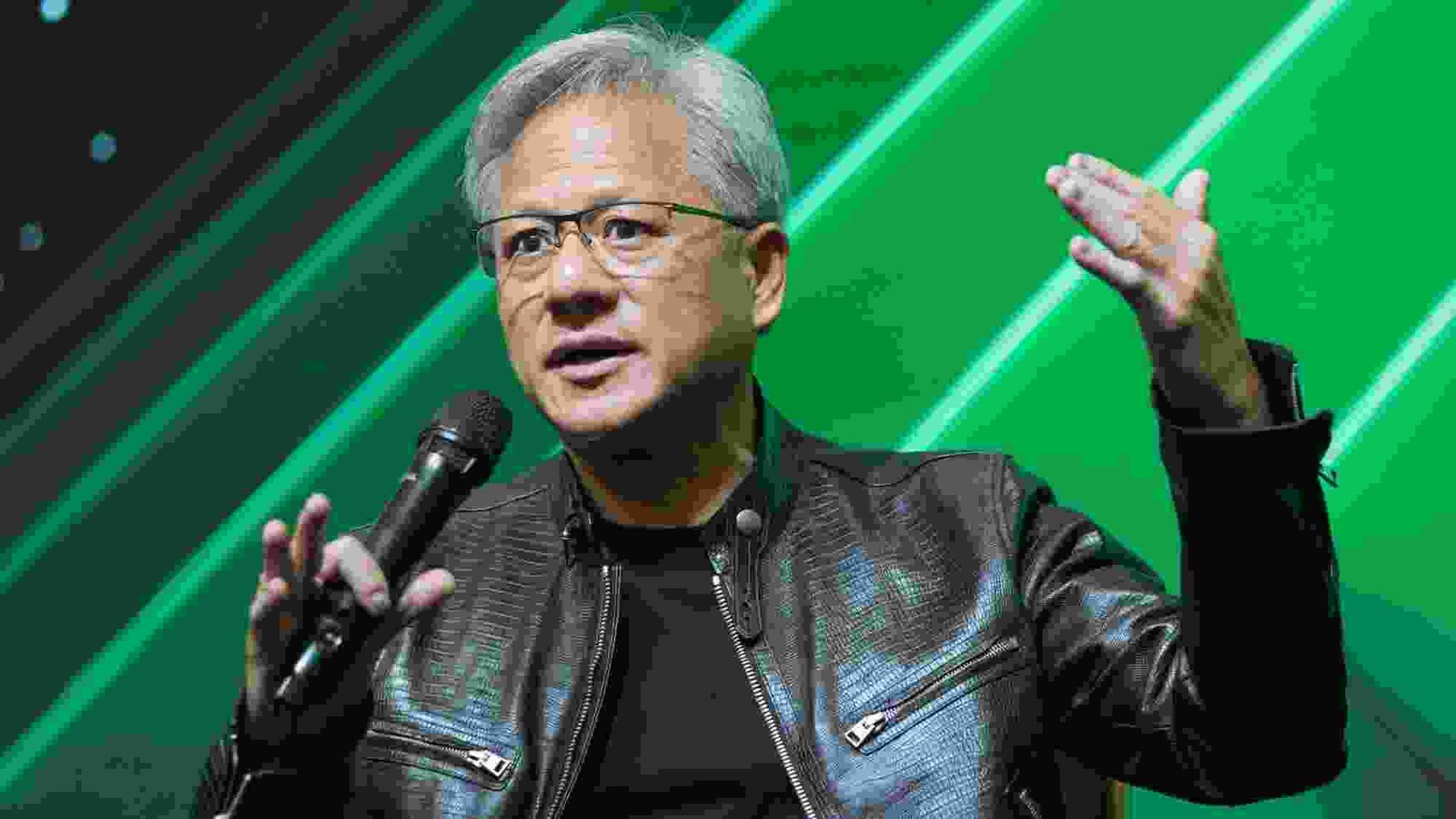
Jensen Huang Just Said AI Chip Orders Will Hit $1 Trillion. NVIDIA CEO Jensen Huang took the stage at GTC 2026 in San Jose and dropped a $1 trillion projection for AI chip demand through 2027. Here’s every major announcement — and what it actually means for you.
FOCUS KEYWORD: NVIDIA GTC 2026
A year ago, Jensen Huang said AI chip demand would hit $500 billion. He just doubled that number — and nobody in a 10,000-person arena even flinched.
That tells you everything about where we are right now.
At NVIDIA’s annual GTC developer conference at the SAP Center in San Jose, Huang told a packed crowd he expects purchase orders between Blackwell and Vera Rubin chips to reach $1 trillion through 2027. Crescendo AI Last year’s number was already considered aggressive. This year he walked out and said it wasn’t aggressive enough.
GTC has been called the Super Bowl of AI, the Woodstock of technology, and the real March Madness. What makes 2026 different from previous years isn’t the scale of the announcements — GTC has been big before. It’s the maturity of the technology being discussed. Tom’s Guide This isn’t speculation anymore. The chips exist. The orders are real. The build-out is happening.
The Biggest Announcements
Huang unveiled the NVIDIA Groq 3 Language Processing Unit — the company’s first chip from the startup it acquired in a $20 billion deal in December, its largest acquisition ever. The Groq 3 LPU is built to sit beside NVIDIA’s Vera Rubin rack-scale system, with a full rack housing 256 LPUs designed specifically to speed up inference workloads. Crescendo AI
Then came Kyber — the architecture that comes after Vera Rubin. Huang showed off a prototype that integrates 144 GPUs in vertical compute trays to boost density and lower latency, expected to ship inside Vera Rubin Ultra in 2027. Crescendo AI NVIDIA is already announcing the chip after the next chip. That’s how far ahead they’re running.
On the software side, NVIDIA launched NemoClaw — an open-source agent stack designed to let developers build and deploy AI agents locally and inside enterprises, without exposing proprietary data. LLM Leaderboard It’s NVIDIA’s answer to OpenClaw, the viral agentic AI platform that’s taken over the industry conversation in the last two months.
Self-Driving Cars Just Had Their ChatGPT Moment
Huang saved one of his biggest lines for autonomous driving. He announced four new automotive partners and a new deal with Uber — saying plainly that “the ChatGPT moment for autonomous driving is here.” Aiandnews
Uber will launch a self-driving fleet powered by NVIDIA’s Drive AV software across 28 cities on four continents by 2028, starting with Los Angeles and San Francisco. Crescendo AI Nissan, BYD, Geely, Isuzu, and Hyundai are all building Level 4 autonomous vehicles on NVIDIA’s Drive Hyperion platform. Autonomous buses using NVIDIA’s AGX Thor chip are already in development.
This isn’t a roadmap. These are signed deals with real launch timelines.
The Robotics Moment Nobody Expected
Huang said he can’t think of a single company building robots that isn’t working with NVIDIA. MML Studio That’s either a bold flex or an accurate statement of the market — and at this point, it might be both.
The conference closed with Huang bringing out an Olaf robot from Disney’s Frozen — trained entirely inside NVIDIA’s Omniverse simulation environment using the Newton physics engine, then deployed into the physical world. LLM Leaderboard It walked onto the SAP Center stage and held a conversation with Huang in front of 10,000 people.
It was theatrical. It was also a live demonstration of exactly what NVIDIA means when it says “physical AI.”
The Honest Part
NVIDIA posted revenue of $68.1 billion in Q4 2025 — up 73% year on year — and has reported record revenue in each of the past several quarters. Tom’s Guide The $1 trillion projection isn’t a fantasy. It’s a company that keeps hitting its numbers asking the world to believe it’ll keep hitting them.
The risk isn’t that Jensen Huang is wrong. The risk is that something outside NVIDIA’s control — a geopolitical shock, an export restriction, a rival chip that changes the cost equation — suddenly makes those orders look different. NVIDIA has entered GTC 2026 amid an acute GPU shortage, with hyperscalers and enterprises having booked much of its capacity, limiting availability for smaller buyers. Innovation News Network
Demand is real. Supply is the constraint. And NVIDIA controls the chokepoint on the most important technology race of this decade.
If there was any question about who’s running the AI era — there isn’t anymore.
SOURCE: CNBC | TechRadar | Tom’s Hardware | NVIDIA Blog
Explore More Latest Articles : Home