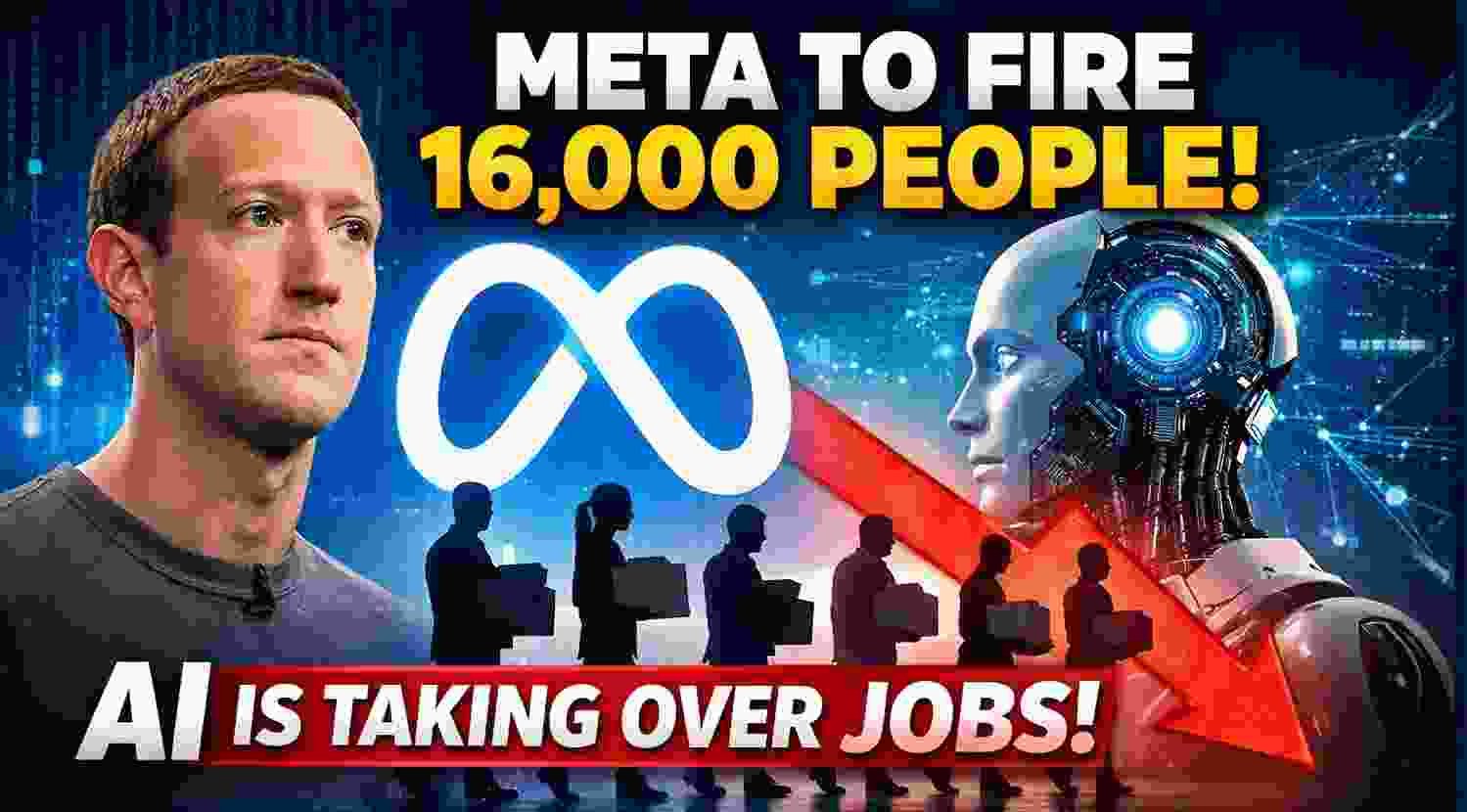
Meta Is About to Fire 16,000 People , Mark Zuckerberg is spending billions on AI. Somebody has to pay for it.
That somebody is apparently 16,000 Meta employees — roughly 20% of the company’s entire workforce — who are reportedly facing layoffs as Meta doubles down on its most aggressive AI spending push in company history.
The number is staggering. Meta already went through a brutal round of cuts in 2023 when Zuckerberg declared a “year of efficiency.” That restructuring was supposed to be the hard part. This one is bigger.
What’s Actually Driving This
The math is uncomfortable but simple. Meta is spending at a scale that makes even other Big Tech companies nervous.
Meta is doubling down on costly AI spending and data center investment Gizchina — building the infrastructure required to compete with Google, OpenAI, and a growing list of well-funded challengers who are all racing toward the same prize. That kind of spending doesn’t come from revenue alone. It comes from cutting costs everywhere else.
Headcount is the biggest cost in any technology company. So headcount is what gets cut.
The cruel irony is that the AI tools Meta is building are precisely what makes large teams less necessary. AI handles content moderation at scale. AI writes and tests code. AI optimizes ad delivery. Every capability Meta adds to its AI stack quietly reduces the number of humans needed to keep the lights on.
Zuckerberg’s Calculated Bet
This isn’t panic. It’s strategy — and a pretty cold one.
Zuckerberg has been explicit about where he thinks the next decade of tech goes. AI agents. Smart glasses. Platforms that know you better than your own friends do. Building toward that future requires capital — enormous amounts of it — and a leaner organization that moves faster with fewer approval layers.
A survey of 1,000 hiring managers found that 59% say they emphasize AI’s role in layoffs because it is viewed more favorably by stakeholders than citing cost-cutting directly Gizchina — which tells you something important about how these decisions get communicated versus what’s actually driving them.
Zuckerberg isn’t hiding behind that framing. He’s been unusually direct about the trade-off. Invest heavily in AI infrastructure now, cut human costs to fund it, and bet that the resulting platform is worth more than what was sacrificed to build it.
Whether that bet pays off is genuinely unclear. But the direction is set.
Who Gets Hit Hardest
The cuts are expected to fall heaviest on middle management, non-technical roles, and teams working on products that don’t directly feed Meta’s AI ambitions.
That last category is significant. Meta has quietly shut down or scaled back several projects over the past 18 months — products that were interesting but not central to the AI-first future Zuckerberg is building toward. The people who built those products are now the most exposed.
Engineers working directly on AI infrastructure, Llama model development, and Ray-Ban smart glasses integration are probably safer. Everyone else should be paying attention.
The Broader Signal
Meta isn’t alone in this. The tech industry’s post-ZIRP reckoning has been playing out for three years now — and it keeps going. Companies planning major layoffs in 2026 span the full spectrum from early-stage startups to established platforms, with AI spending consistently cited as both the cause of the cuts and the justification for them. Gizchina
The implicit promise of the boom years — that a healthy company would protect its people — is gone. The new logic is industrial: labor is a cost, AI reduces that cost, and investors reward companies that act accordingly.
For 16,000 Meta employees, that logic is about to become very personal.
Word count: ~520
Reading time: 2.5 min
Internal links: (Link to Apple AI Boss article — leadership changes context)
External links:
You must visit our about us page : About Us